
FIEC and Build Europe call for permitting certainty for affordable housing
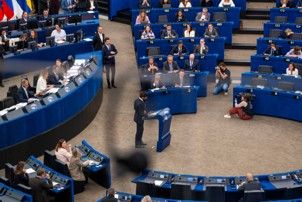
The negotiations on the EU’s 2028–2034 Multiannual Financial Framework (MFF) are entering a decisive phase, with EU leaders expected to discuss the next long-term budget at a special European Council meeting on 26–27 November. The outcome will determine the EU’s investment priorities and funding framework for the seven years ahead, with major implications for Europe’s construction industry.
The Irish Council Presidency’s "October compromise proposal" would reduce the European Commission’s proposed budget by approximately 8% (€141 billion). The European Parliament, however, is calling for a more ambitious and adequately funded MFF, warning that a smaller budget would undermine the EU’s ability to deliver on its objectives. President of the European Parliament Roberta Metsola has stressed that the Union’s ambitions must be matched by the necessary financial resources. Speaking at the European Parliament’s Invest in What Matters session held on 10 November, she highlighted "the importance of empowering cities and regions and ensuring that EU funding delivers tangible benefits for citizens".
Infrastructure, Connectivity, Energy and the Partnership Plans
For the construction sector, the negotiations are particularly important in determining the resources available for infrastructure, connectivity, energy networks, housing and regional development. A key development came on 10 November, when the European Parliament’s Industry (ITRE) and Transport (TRAN) Committees supported an allocation of €91.3 billion for the Connecting Europe Facility (CEF), compared with the European Commission’s initial proposal of €81.4 billion, both in current prices. The final allocation will be crucial for supporting cross-border transport and energy infrastructure and strengthening Europe's connectivity.
The proposed National and Regional Partnership Plans (NRPPs) will also play an important role in shaping how EU funding reaches regions and supports investment, including in affordable housing. Their design and implementation will therefore be particularly relevant for construction companies and regional investment projects.
FIEC welcomes the European Parliament’s support for stronger funding for transport infrastructure and calls for the next MFF to safeguard cohesion investment, ring-fence funding for affordable housing, and ensure predictable support for energy-efficient building renovation and water infrastructure. "An ambitious and well-structured EU budget is essential to mobilise investment, strengthen Europe's competitiveness and resilience, and deliver the infrastructure and buildings needed for Europe's future", commented Domenico Campogrande in the light of recent developments.
Read or download FIEC Position Paper on this matter.
-

2026-03-19_FIEC_Position_Paper_EU_Budget.pdf